Sharing and taking turns: the first steps of social-emotional learning


Sofia Martinez is a play-based learning advocate and former preschool teacher. He writes about curiosity-driven education and practical ideas parents can use at home every day.

Sharing and taking turns: the first steps of social-emotional learning
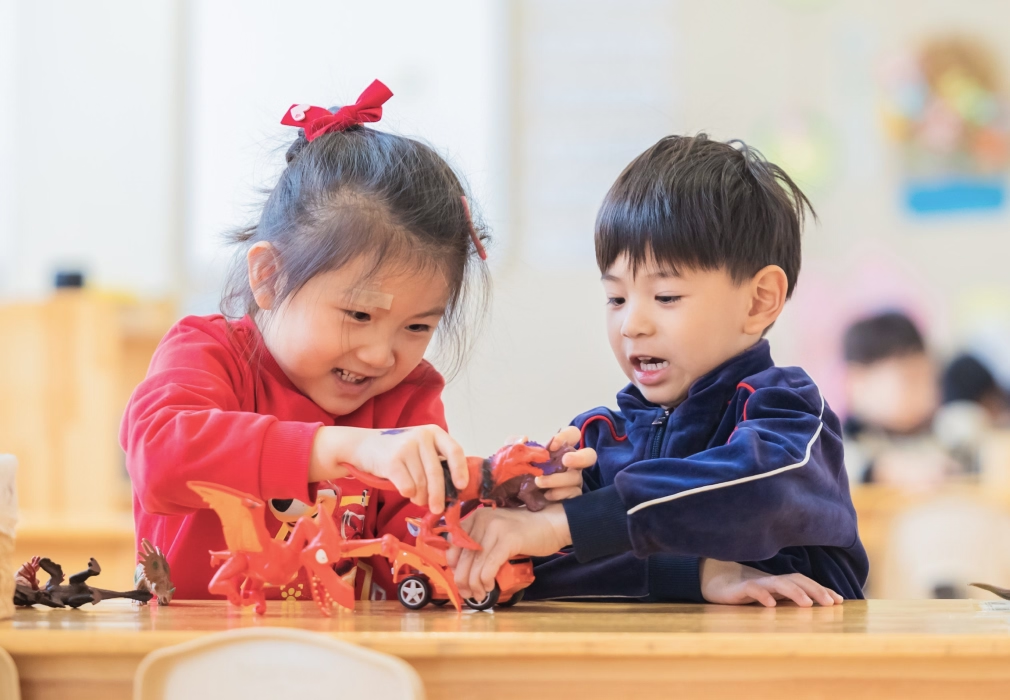
Watch two children play together and you'll see it happen dozens of times a day — a toy is offered, a turn is negotiated, a small disagreement is worked out. These tiny moments are where social-emotional learning really begins.
Why sharing is harder than it looks
For young children, sharing isn't just a matter of manners — it asks them to manage real feelings of wanting something and to trust that their turn will come. It's a skill that develops gradually, not something children simply "know" how to do.
- Modeling – Children learn by watching adults share, wait, and take turns calmly.
- Language – Simple phrases like "my turn, then your turn" give children words for the process.
- Practice – Everyday play with peers is the best rehearsal for real sharing.
How we support it in the classroom
Our teachers use small-group play, turn-taking games, and gentle guidance to help children practice these skills in a low-pressure setting, celebrating every successful turn along the way.
Final thoughts
Sharing is a skill built one small moment at a time. With patience and plenty of practice, children carry these lessons in cooperation and empathy well beyond the classroom.